Common Questions
Frequently Asked
◆
Are lab-grown diamonds real diamonds?
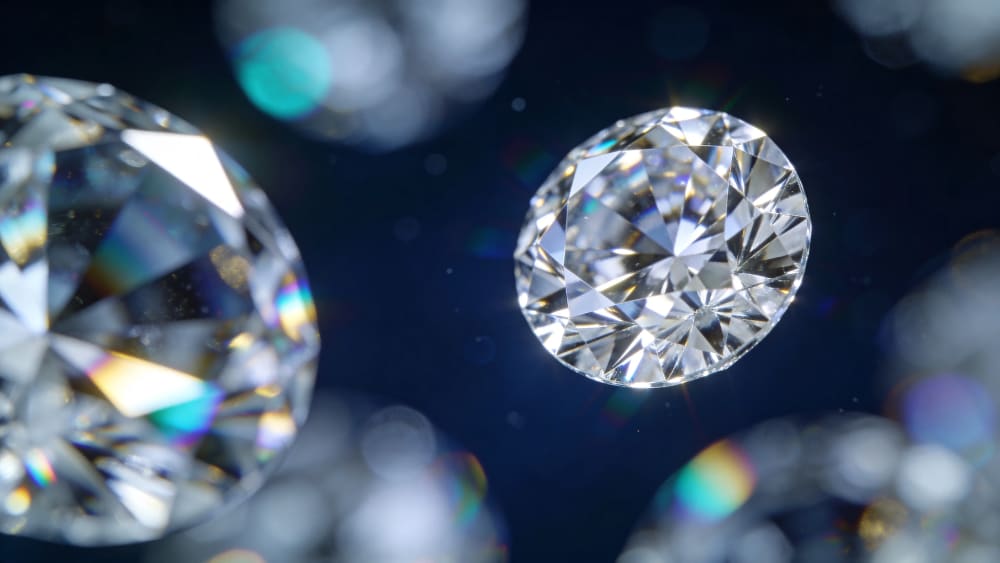
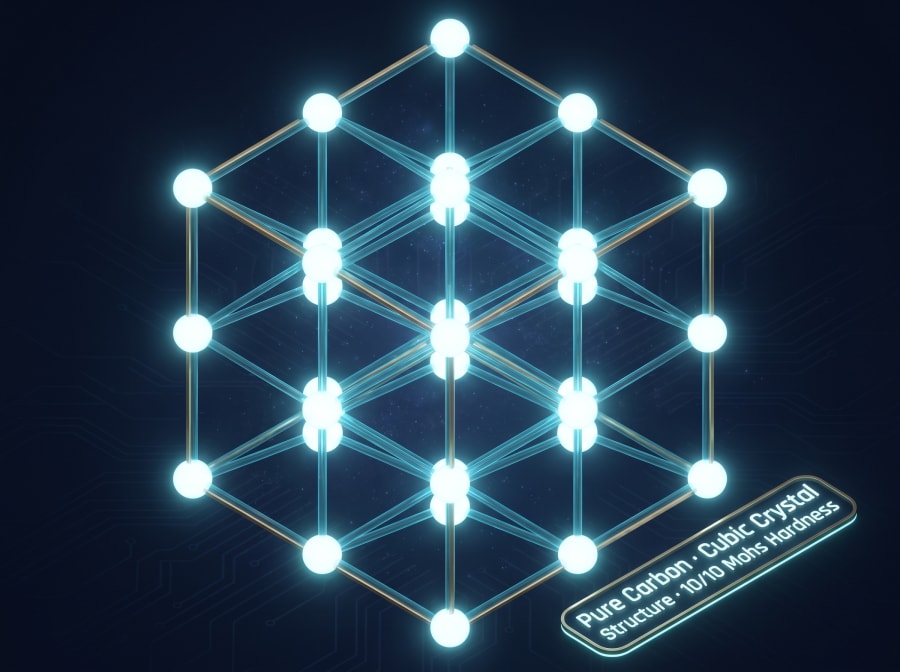
Yes — completely. Lab-grown diamonds have the same chemical composition (pure carbon), the same cubic crystal structure, and the same optical and physical properties as mined diamonds. The GIA and IGI certify them with the same rigorous standards and grading scales. GIA's official position is: "Lab-grown diamonds are diamonds." No gemologist using standard tools can tell the difference.
What is the difference between CVD and HPHT?
CVD (Chemical Vapour Deposition) grows diamonds from a carbon-rich gas plasma at relatively low pressure over 6–12 weeks, often producing exceptionally pure Type IIa stones with D–F colour. HPHT (High Pressure High Temperature) mimics earth's mantle conditions at 50,000+ atmospheres and 1,300–1,600°C, with a slightly faster growth cycle of 3–4 weeks. Both methods produce genuine, certifiable diamonds. The method is noted on the GIA certificate and does not affect the diamond's physical properties.
How does GIA grade lab-grown diamonds?
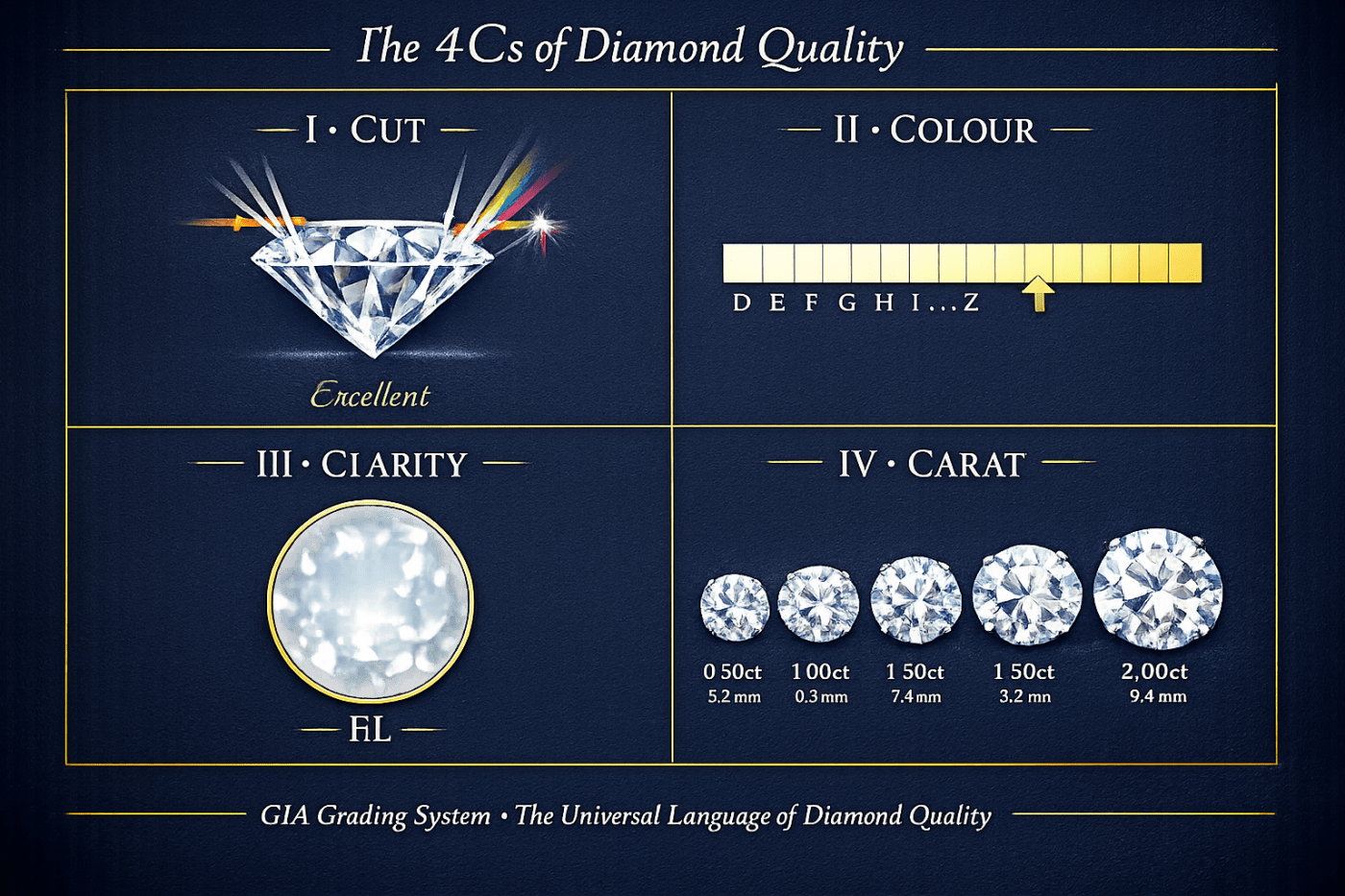
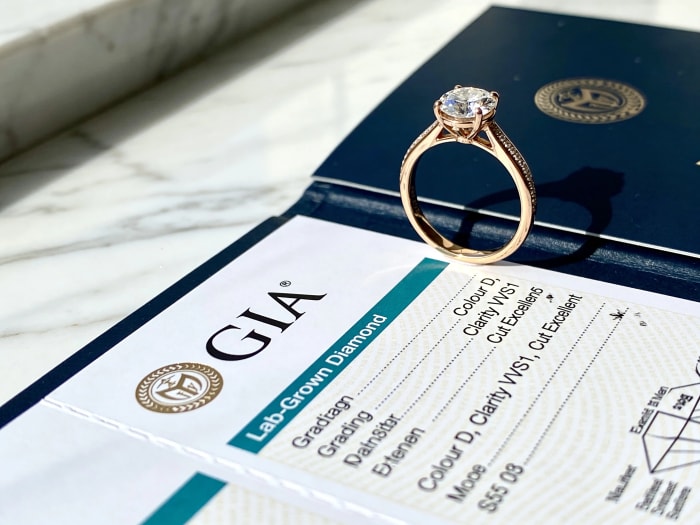
GIA uses the same 4Cs grading system as for natural diamonds: Colour (D–Z scale), Clarity (FL through I3, assessed at 10× magnification), Cut (Excellent through Poor for round brilliants), and Carat Weight. The stone is submitted anonymously and graded by multiple independent gemologists. The resulting Lab-Grown Diamond Grading Report is distinguished by its teal colour scheme and explicitly states "LABORATORY GROWN." The report number is laser-inscribed on the stone's girdle.
What does the colour grade D actually mean?
D is the highest colour grade on GIA's scale — it means the diamond is completely colourless when viewed face-down by a trained gemologist under standardised, controlled lighting. D–F grades are all considered "colourless." The difference between D and F is invisible to most people. G–J stones are "near colourless" and appear white when set in a ring. CVD lab-grown diamonds commonly achieve D–F grades because the growth process naturally produces very pure, colourless crystals.
Can a jeweller or gemmologist tell the difference?
No — not with standard tools. Lab-grown and mined diamonds are physically and chemically identical. Even experienced gemmologists using loupes, microscopes, spectroscopes, and refractometers cannot distinguish them. Only purpose-built laboratory instruments — such as the GIA iD100 or De Beers SYNTHdetect — can identify a lab diamond by detecting trace differences in crystal growth patterns. Your GIA certificate and laser inscription make the origin explicit without needing any testing.
Why are lab-grown diamonds 60–80% more affordable?
The price of a mined diamond reflects the entire supply chain: geological surveys, mining operations, water usage, land rehabilitation, transportation, customs, multiple intermediaries, and the rarity premium. Lab-grown diamonds bypass all of this. The only costs are the growth facility, energy, skilled labour for cutting, and certification. The saving is passed directly to you — the same certified stone, at a fraction of the price.
What clarity grade should I choose?
We recommend VS1 or above for most shapes. VS1 and VS2 stones have inclusions that are very difficult to see even under 10× magnification and completely invisible to the naked eye. For step cuts (emerald, Asscher) — where the open table acts like a mirror — we recommend VVS2 or higher, as the facet arrangement makes inclusions more visible than in brilliant cuts. All our rings are offered with VS1 minimum; we stock VVS1 and VVS2 for our emerald-cut Pureté ring.
What is the IGI and how does it differ from GIA?
IGI (International Gemological Institute) is the world's largest independent gem certification laboratory, based in Antwerp. Like GIA, IGI grades diamonds on the same 4Cs scale. IGI was one of the first labs to develop a specific grading system for lab-grown diamonds and is highly regarded in the lab-grown diamond industry. Both GIA and IGI certificates carry significant market recognition. Some jewellers find IGI grading slightly more generous than GIA for borderline clarity grades — we specify which lab certified each stone in every listing.